

Indoor Rabbit Habitat Setup: A Complete Beginner Checklist
How to Set Up the Perfect Indoor Rabbit Habitat
Think less “tiny cage” and more “mini bunny apartment.” Here’s how to create a safe, comfortable and enriching indoor home where your rabbit can hop, stretch, hide, forage and relax.
1. Choose a Roomy Enclosure 🏠
An exercise pen is often much more flexible than a traditional small rabbit cage.
Your rabbit should be able to stand upright comfortably, stretch out completely and move around the enclosure without constantly bumping into furniture, bowls or walls.
Larger rabbits—and especially bonded pairs—will naturally require more space and additional resources.
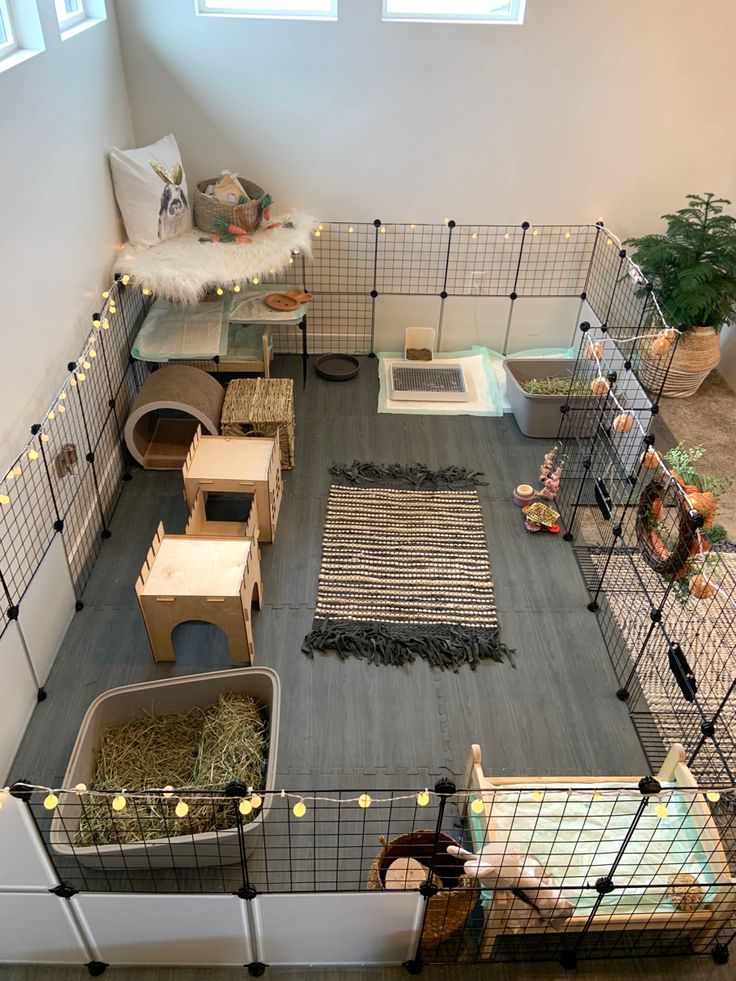
Whenever possible, provide daily supervised access to a bunny-proofed room or larger exercise space in addition to the main enclosure.
2. Give Those Paws Some Grip 🐾
Smooth tile, laminate and hardwood may look great to us, but they can feel like an ice rink to a rabbit.
Whatever flooring you choose, watch your rabbit’s behavior. A material that works perfectly for one rabbit may become a chew toy for another.
3. Build the Ultimate Litter + Hay Station 🌾

Place a large litter box where your rabbit naturally prefers to toilet.
Rabbit-safe paper-based litter or another litter recommended by a rabbit-experienced veterinarian is generally a more suitable choice than strongly scented or clumping cat litter.
🌾 The clever part: add hay
Place plenty of grass hay inside or immediately beside the litter box. Many rabbits enjoy eating hay while using their litter area.
4. Create a Rabbit Café 🥬💧
Your bunny doesn’t need table service—but a thoughtfully arranged feeding station makes daily care easier.
Water Bowl
A heavy ceramic water bowl is easy to drink from and difficult to knock over.
Grass Hay
Hay should form the foundation of an appropriate adult rabbit diet, with individual needs discussed with your veterinarian.
Greens & Pellets
Leafy greens and measured rabbit-appropriate pellets can be selected according to your rabbit’s age, size and health needs.
Make major dietary changes gradually rather than suddenly. Young, senior or medically complicated rabbits may have different nutritional requirements.
5. Add Hideouts, Tunnels & Bunny Entertainment 🎮
A rabbit habitat shouldn’t just contain necessities. It should give your rabbit opportunities to explore, hide, chew, dig and forage.
🕳️ Start with a safe hideout
Provide at least one comfortable hiding place. A hide with two exits is especially useful because your rabbit can enter and leave without feeling trapped.
Fun enrichment ideas
- 📦 Cardboard boxes
- 🚇 Rabbit-safe tunnels
- 🌿 Untreated willow toys
- ⛏️ Digging boxes
- 🧠 Food-foraging games
- 🪵 Safe chew materials
Rotate activities occasionally so the environment stays interesting.

6. Bunny-Proof Like Your Cables Depend on It ⚡
Because, frankly, they probably do.
Rabbits are curious animals and chewing is natural behavior. Before allowing free exercise around the home, look at the room from approximately rabbit height.
Protect them completely or move them out of reach.
Prevent access behind appliances and inside reclining furniture.
Keep unsafe plants, cleaners, medicines and small objects away.
Use suitable barriers around baseboards and tempting furniture.
Don’t assume dogs, cats and rabbits can safely interact unsupervised.
Check gates, doors and pen panels for places a determined bunny could squeeze through.
7. Keep the Bunny Apartment Fresh 🧹
A little daily maintenance is easier than letting everything pile up.
Schedule deeper cleaning according to the size of the enclosure, number of rabbits and litter setup. Use rabbit-appropriate cleaning products and rinse surfaces well.
🐰 Interactive Indoor Rabbit Habitat Checklist
Building your bunny’s home? Click each item as you complete it.
🚑 Know When Something Isn’t Right
Rabbits can be very good at hiding signs of illness, which makes everyday observation especially important.
Seek prompt advice from a rabbit-experienced veterinarian if you notice a significant or sudden change, especially:
When in doubt, contact a rabbit-experienced veterinary professional rather than waiting for symptoms to become severe.
Frequently Asked Questions About Indoor Rabbit Habitats
Can a rabbit live in a cage all day?
A small traditional cage generally doesn’t provide enough room for normal movement and enrichment as a rabbit’s entire living environment. A larger pen, bunny-proofed room or similarly spacious setup provides much more opportunity to move, stretch and explore.
What is the best flooring for an indoor rabbit?
Look for a comfortable, non-slip surface such as a suitable washable rug or mat. Avoid exposed wire flooring and monitor any material your rabbit may chew or ingest.
Where should I put my rabbit’s hay?
A convenient setup is to place hay in or directly beside the litter area. This keeps hay easily accessible and works well with the habits of many rabbits.
Should rabbits drink from a bowl or bottle?
A sturdy ceramic bowl provides easy access to water and is hard to tip over. Some households also keep a bottle as an additional water source or backup.
What toys can I put in a rabbit enclosure?
Cardboard boxes, tunnels, suitable untreated willow items, digging activities and forage-based toys can encourage natural behaviors. Always watch how your individual rabbit interacts with each item.
How often should I clean an indoor rabbit habitat?
Spot cleaning is useful every day, especially around the litter area, water and hay. More thorough cleaning can be performed periodically depending on the size and design of the habitat.
Happy Home, Happy Bunny
The best rabbit habitat combines space, safety, comfort and enrichment. Give your rabbit a secure home base, plenty to explore and daily attention—and you’ll have one seriously spoiled bunny.