
.jpg)
Best Puppy Toys: A Safety-First Guide for Every Stage
Best Puppy Toys: A Safe Guide to Chewing, Teething & Play
Puppies have two hobbies: exploring absolutely everything and deciding whether absolutely everything belongs in their mouth. Here’s how to give that curiosity a safer place to go.
Good puppy toys can provide appropriate outlets for chewing, encourage play, add mental enrichment and help build positive interactions between your puppy and the family.
There is no single “best toy” for every puppy. Size, chewing style, age and how the toy will be used all matter.
1. What Makes a Good Puppy Toy? 🧸
A useful puppy toy should be appropriately sized, reasonably durable for the individual puppy, simple to inspect and suitable for the kind of play you expect.
The toy should be large enough that your puppy cannot easily swallow it or lodge the entire toy in the mouth.
Check seams and avoid easily detached strings, ribbons, plastic eyes or decorative pieces.
Keep different options for chewing, fetching, enrichment, tugging and comfort.
You should be able to quickly see when seams, edges or individual pieces are beginning to fail.
A toy that survives months with a gentle 3 kg puppy might last minutes with a powerful 20 kg chewer.
2. Best Toy Types for Teething Puppies 🦷
Teething puppies often actively seek things to chew. Providing appropriate textures gives them a better option than table legs, shoes and your phone charger.
Puppy-specific rubber chew toys can be a practical starting point when the size and material are suitable for your puppy.

🦷 Think “Firm but Forgiving”
Extremely hard chews can place unnecessary stress on developing or adult teeth. When you’re uncertain about a material, ask your veterinarian whether it’s appropriate for your puppy.
Puppy-appropriate materials that aren’t rock hard.
Look for cracks, missing chunks and sharp edges.
Extremely rigid objects may pose a tooth-injury risk.
3. Interactive & Enrichment Toys 🧠
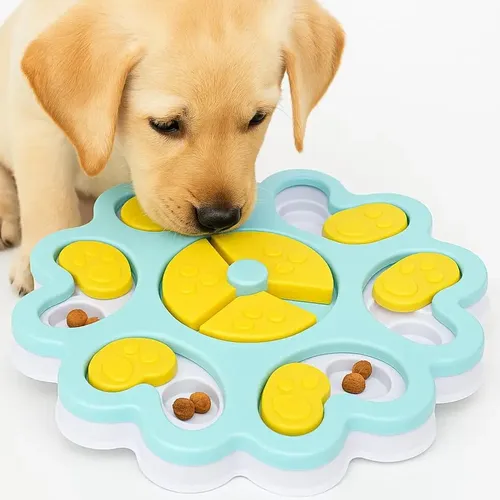
Enrichment doesn’t have to mean buying the hardest dog puzzle available and watching your puppy stare at it in confusion.
Beginner food-dispensing toys and simple puzzle toys can turn part of a normal meal into an activity.
Any food placed inside enrichment toys should be counted toward the puppy’s normal daily ration rather than automatically becoming extra calories.
4. Chew, Fetch, Tug & Comfort Toys 🎾
A good puppy toy collection doesn’t need twenty versions of the same squeaky ball.
🦴 Chew Toys
Choose puppy-appropriate chew toys sized for your dog’s mouth and chewing strength.
Their job is to give chewing behavior somewhere appropriate to go.
🧩 Food & Puzzle Toys
Use part of a measured meal or a small amount of training food to create a short mental activity.
Begin with easy puzzles and increase difficulty gradually.
🎾 Fetch & Tug Toys
Dog-appropriate soft balls can be easier on young mouths than very hard balls.
For tugging, choose a broad sturdy toy and keep the game controlled and playful.
🧸 Comfort Toys
Some puppies enjoy carrying or resting against soft toys.
Plush toys are best suited to puppies that carry them rather than immediately dismantle them.
5. Turn Toys Into Training Opportunities 🎓
Teach “Drop”
During tug or fetch, encourage your puppy to release the toy by trading for something rewarding.
Play Together
Interactive games make toys part of your relationship rather than objects your puppy always uses alone.
Let the Puppy Succeed
Early enrichment should be simple enough that your puppy can understand how to earn the reward.
6. The 4-Toy Puppy Rotation 🔄
Instead of covering the entire floor with toys, try offering a few useful choices and rotating them every few days.
Rotating toys can renew interest while also making it much easier for you to inspect everything regularly.
✅ Interactive Puppy Toy Safety Checklist
Click each item once you’ve checked it.
🚨 When a Puppy Toy Goes Straight in the Trash
A damaged toy isn’t a challenge for your puppy to finish destroying. Once important parts begin failing, retire it.
If you suspect your puppy swallowed part of a toy, contact a veterinarian promptly. Don’t assume the piece will safely pass without professional advice.
7. Your Puppy’s Toy Box Should Grow With Them 📈
The right toy at 10 weeks old may not still be the right toy several months later.
Body Size
Toys that become too small should be replaced with appropriately sized alternatives.
Adult Teeth
Reassess chewing materials as adult teeth arrive.
Jaw Strength
A puppy’s chewing power can increase dramatically during development.
Play Style
Puppies may evolve from gentle carriers into serious shredders—or the other way around.
Frequently Asked Questions About Puppy Toys
What are the best toys for a teething puppy?
Puppy-specific chew toys made from firm but reasonably forgiving materials can be a practical choice. The toy should be appropriate for the puppy’s age, size and chewing style and should be inspected regularly for damage.
How many toys should a puppy have?
There is no required number. A small rotation can work very well. For example, you might offer one chew toy, one enrichment toy, one fetch or tug toy and one comfort toy at a time.
Should puppies have access to toys all day?
Some durable toys may be suitable for longer access depending on the puppy, while other toys require close supervision. Toys should be selected according to how your individual puppy interacts with them.
Are very hard chew toys safe for puppies?
Extremely hard objects can potentially damage teeth. If you’re uncertain whether a chew material is suitable, ask your veterinarian for guidance.
Can puppies use food puzzle toys?
Yes, simple puppy-appropriate food puzzles can provide useful mental enrichment. Start with an easy puzzle and count the food used inside it as part of the puppy’s daily intake.
Are plush toys safe for puppies?
Plush toys may work well for puppies that gently carry or cuddle them. Puppies that shred toys require much closer supervision. Remove the toy when seams open or stuffing becomes accessible.
How often should I replace puppy toys?
Replace a toy based on its condition rather than a fixed calendar. Retire it when chunks are missing, seams fail, parts loosen or dangerous edges appear.
What should I do if my puppy swallowed part of a toy?
Contact a veterinarian promptly for advice. The appropriate response depends on what was swallowed, how much, the puppy’s size and whether symptoms are present.
A Better Toy Box Beats a Bigger Toy Box
The best puppy toys are the ones that fit your puppy’s size, age, chewing strength and play style today. A small, thoughtfully selected rotation that’s inspected regularly is usually more useful than a floor covered with forgotten toys.