
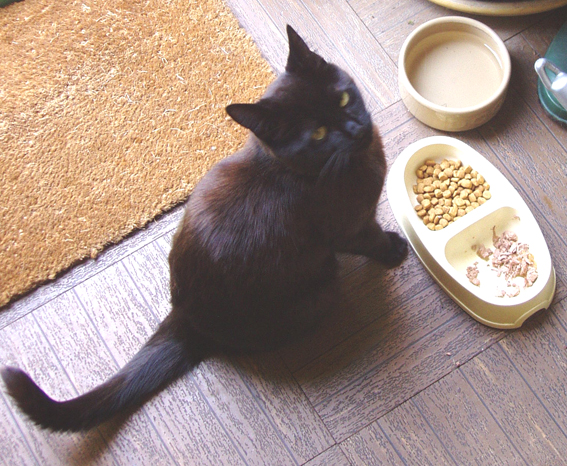
How Often Should You Feed a Cat? A Practical Schedule Guide
The Complete Cat Feeding Schedule Guide
Breakfast at 7:00? Dinner at 6:00? Midnight snack at approximately whenever your cat demands it? Here’s how to build a practical feeding routine that works for both you and your feline food critic.
There isn’t one perfect timetable for every cat. Age, health, activity level, food type and veterinary recommendations all influence what works best.
1. How Many Meals Does an Adult Cat Need? 🕒
Many healthy adult cats do well with at least two measured meals per day, often spaced roughly 8 to 12 hours apart.
Other cats may prefer three or four smaller meals, particularly if they naturally like eating small portions throughout the day.
The total amount of food offered across the entire day. Four small meals shouldn’t accidentally become four full meals.
If you’re away during the day, an automatic feeder can help divide a measured daily ration into smaller portions.

2. Feeding Kittens: Tiny Stomachs, Big Appetites 🐾
Kittens are growing rapidly and generally have higher energy requirements relative to their size than adult cats.
More Frequent Meals
Young kittens generally need several smaller meals throughout the day because their stomachs are still small.
Growth Formula
Choose a complete food formulated for growth and appropriate for the kitten’s life stage.
Adjust as They Grow
Feeding needs can change quickly as a kitten gains weight, grows and becomes more active.
Use the food manufacturer’s age and weight guidance as a starting point and discuss your kitten’s growth and body condition during routine veterinary visits.
3. Senior Cats & Cats With Health Conditions ❤️

Older cats may sometimes benefit from smaller, more frequent meals, particularly when appetite becomes less consistent.
Cats with medical conditions need more individualized feeding plans.
Medication timing can also interact with meals. In these situations, follow the veterinarian’s instructions rather than relying on a general online feeding timetable.
4. Measure the Daily Portion ⚖️
One of the easiest ways to accidentally overfeed a cat is continually adding “just a little more.”
Start with the feeding guidance provided with a complete-and-balanced cat food, then adjust according to your cat’s weight trend, body condition and veterinary advice.
🧮 The simple portion system
Treats, toppers and food used during training still count toward the day’s total intake. Keep extras relatively small so they don’t replace balanced food.
5. Wet Food, Dry Food—or Both? 🥫
Wet food, dry food or a combination can all fit into a feeding routine when the chosen food is complete and appropriate for the cat’s life stage and individual needs.
🥫 Wet Cat Food
Wet food contains more moisture and can be useful for cats that benefit from increased water intake.
Once opened, store leftovers according to the package instructions and avoid leaving wet food sitting out for excessive periods.
🥣 Dry Cat Food
Dry food is convenient for measured automatic feeders, portioning and many food-puzzle toys.
Because dry food is calorie dense, accurate portions are especially helpful.
The calories from both should be considered together as part of the total daily intake.
6. Free Feeding vs. Scheduled Meals 🥣
Leaving food out all day
Some cats are used to grazing whenever they want. While this can work in selected situations, it can make accurate portion tracking much harder.
It becomes especially challenging in a multi-cat household, where you may not know which cat ate how much.
Scheduled meals
Measured meal times can make it easier to track appetite, daily intake and changes in eating behavior.
Switching a Grazer?
Don’t suddenly remove an established feeding routine and expect your cat to instantly understand the new one.
Gradually transition by offering several smaller, measured meals before simplifying the schedule.
7. Sample Adult Cat Feeding Routine ⏰
Here’s a simple example for a healthy adult cat eating a measured daily ration.
✅ Interactive Cat Feeding Checklist
Click through the list and see how your cat’s current routine stacks up.
🚑 When a Feeding Change May Be a Health Warning
One major advantage of measured meals is that unusual appetite changes can become easier to notice.
Contact a veterinarian promptly if you notice concerning signs such as:
Cats can become seriously unwell when they stop eating, so significant appetite loss shouldn’t simply be ignored while waiting several days to see what happens.
Frequently Asked Questions About Cat Feeding Schedules
How many times a day should an adult cat eat?
Many healthy adult cats can do well with at least two measured meals each day. Some cats prefer three or four smaller meals. The ideal routine depends on the cat and the total daily food intake.
Is feeding a cat twice a day enough?
For many healthy adult cats, two appropriately sized meals can form a practical routine. Kittens and cats with certain health conditions may need a different schedule.
How far apart should cat meals be?
Two-meal routines are commonly arranged roughly 8 to 12 hours apart. The schedule can be adjusted to your cat’s needs and your household routine.
Is it okay to leave dry cat food out all day?
Free feeding may work for some cats, but it makes it harder to track exact intake and may complicate weight management, particularly when several cats share the same home.
Can I feed my cat wet and dry food together?
Yes. A mixed feeding plan can work well, provided the foods are appropriate for the cat and you calculate the combined daily quantity rather than giving a full daily allowance of each.
Do kittens need to eat more often than adult cats?
Generally, yes. Young kittens have small stomachs and substantial growth requirements, so several smaller meals are commonly more appropriate.
Should I feed my cat at exactly the same time every day?
Exact minute-by-minute timing usually isn’t necessary for a healthy cat, but a reasonably consistent routine can make appetite monitoring and portion control easier.
Consistency Beats the Perfect Clock
The best cat feeding schedule is one that provides appropriate nutrition, measured portions and predictable meals while fitting your cat’s individual age, activity level and health needs.